
Ricardo Villarreal

Think, Therefore Think Again

  • LinkedIn
  • Twitter
  • Vimeo
  • YouTube

  • Home
  • About Me
  • My Films
  • My Band
  • More
  • Contact

Trump’s Checkmate

May 8, 2017 by Ricardo Villarreal

Checkmate TrumpThe latest issue of The New Yorker (May 8, 2017) shares “Endgames” by Evan Osnos, a very comprehensive piece on what it would take to bring down Trump’s Presidency, focusing on the US Constitution’s Twenty-Fifth Amendment, the possibility of an impeachment, or even a self-imposed Nixonian exit.

While it is true that no US President has ever been immune to criticism, Trump entered his presidency having lost the popular vote by 3 million votes, in a sharply divided nation, with plenty of chaos, and fueled by a huge opposition of citizen activists and critics that so early in his term are calling for his impeachment.

His start has been everything but smooth sailing. Full of controversial executive orders, an unwillingness to release his tax returns, a questionable cabinet of incompetent loyalists, massive marches and protests all over the country, nepotism & conflicts of interest, and a federal investigation into a collusion with Russian interference of the 2016 US presidential election, among others, have gained Trump the lowest approval rating of any President in modern US history.

To make things worse, his arrogance and inability to take any negative criticism has irritated many people from his own political party. Trump is simply not interested in responding to his own actions, accountability is non-existent for him, and it’s always someone else’s fault.

But, can something really be done to take down Trump?

Yes, but the road to get there is not necessarily quick nor easy. Evan Osnos describes, for instance, how in 228 years of US political history, only one President has resigned and two have been impeached (although they were not removed from office).

One legal option to remove the President lies in the Twenty-Fifth Amendment of the US Constitution.

This amendment was adopted on February 10, 1967 and it deals with the succession to the Presidency as well as responding to the President’s disabilities. More precisely, but not as specific as we would like, Section 4 deals with the removal of the President if he is “unable to discharge the powers and duties of his office.”

The common denominator for using this legal instrument has to do with the possibility of Trump being mentally unfit.

Speculation about Trump’s mental health started during the presidential campaign, but it has kept growing and it remains a big concern as the US and the world rely on his decision-making abilities to deal with imperative world affairs matters.

Osnos reveals how more than 50,000 mental-health professionals have signed a petition stating that Trump is “too seriously mentally ill to perform the duties of President and should be removed” under the 25th Amendment.

The author also shares with us a revealing study by psychiatrists at Duke University concluding that about half of US Presidents they researched had suffered a mental illness. With this, he details three particular cases that are worth noting:

Pro-slave President Franklin Pierce was a heavy drinker and suffered from depression after his son’s death at a crucial time in US history, years before the start of the Civil War. President Lyndon B. Johnson was also affected with paranoia as the Vietnam War escalated.

And finally, President Ronald Reagan’s judgment, as well as his speech and decision-making abilities, changed during the last years of his presidency. Five years after leaving office, Reagan was diagnosed with Alzheimer’s disease.

Trump does carry a lot of baggage against him that could trigger using this amendment, and there are elements that make people rightfully suspicious of his judgmental abilities and mental health.

To name a few, his constant repeating of proven falsehoods, his use of a fourth-grade level language, his threatening rhetoric against those who criticize him, his obscene narcissism and unpredictable behavior, and his incitement of violence against protesters, are among the dangerous signs that have people very worried.

Dispensing Section 4 of the 25th Amendment on Trump is a very possible, although not immediate, scenario.

Next comes the possibility of impeachment. The grounds for it include: “Treason, Bribery, or other high Crimes and Misdemeanors.”

One very important point Evan Osnos shares here comes from an interview he had with David O. Stewart, the author of “Impeached,” who told him: “impeachment is not a judicial proceeding, but a tool of political accountability.”

Among the reasons for impeachment are several undergoing investigations of Trump, including the very serious amounting evidence of collusion with Russia to win the 2016 presidential election, and his reluctance to resign from his business holdings and profiting from them while holding the office of the Presidency, plus violating the US Constitution’s Foreign Emoluments Clause.

On this last example of using the public office for private gain, let’s not forget the State Department had to take down a website that promoted Trump’s Mar-a-Lago Resort.

But again, impeachment is not likely to happen soon. Not while Republicans hold the majority in Congress and the Senate. But Democrats have a big chance in the 2018 midterm elections to gain back political control and generate a bill for impeachment.

Finally, there is also the possibility of a Nixonian exit. One where Trump, cornered by multiple scandals, simply offers his resignation. He has expressed he misses his old life and that being President wasn’t as easy as he thought.

But as positive as it would be getting rid of an unstable and toxic President like Trump (if it ever happens before 2020), the scenario of dealing with a Mike Pence Presidency will also have its share of challenges in a country that desperately needs progressive actions to move forward.
 

Filed Under: Politics Tagged With: Donald Trump, Impeach Trump, impeachment, politics, The New Yorker, Twenty-Fifth Amendment, us politics

How plutocracy and religion are killing American democracy

February 23, 2017 by Ricardo Villarreal

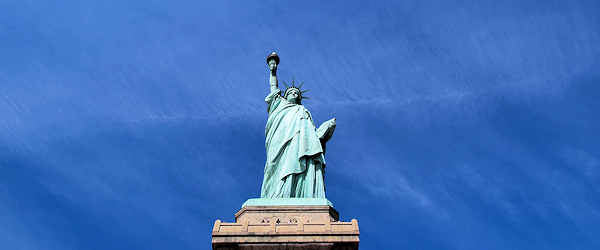
Statue of LibertyIt’s happening. The guy at the very top position of power is threatening the foundations of liberal democracy in our country by paving the way for plutocracy and religion to perpetrate in the functions of the government.
We need to continuously remind people who is this enabler: a self-called billionaire who lacks all the important skills to be president, a revengeful leader, ignorant of the country’s constitution, who continuously lies to the public, who has shown no respect for minorities, who doesn’t take any criticism, and who has even singled out the media as the enemy of this country.

Sure, democracy has room for improvement. Nevertheless, it is still the best form of government and we need to protect it now more than ever.

The current administration shines not for having the smartest individuals at the top jobs, but for their wealth. Their biggest merit is certainly not a qualification at all.

It is, however, the fuel that feeds plutocracy. The ultra-wealthy people in this nation help elect those in government, and in return gain the power to secure cabinet roles and to influence political decisions that would protect their interests and businesses, rather than the interests of the general population.

Not only that, but they think money and power give them the right to impose their beliefs on others. And this is how plutocratic forces amplify the dangers of religion and the risks it represents to our freedom and democracy.

For example, the presence of religion in politics has influenced legislation that has negatively impacted the rights of women and minorities on issues like abortion and gay marriage.

In education, politicians of faith in many states have tried to impose religious subjects in public schools as alternative to science. This is a clear reflection of the fear they have that scientific knowledge presents indisputable evidence and objective truths that undermine the validity of their religion.

There is no question religion thrives in an environment of ignorance, fear, and oppression. But suppressing science, reason, and truth is not an option.

Where does religion belong? In the privacy of individuals, not commandeering the functions of government, and certainly not becoming an obstacle in the exercise of freedom in an open society.

Only in a secular government can diversity, freedom of religion, equality, and a fair rule of law can coexist, while protecting democracy from any abuse, discrimination, and corruption that would favor one religion over the rest.

Rather than imposing beliefs, it is better for a country to have a society of free-thinkers, where ideas can be exchanged freely with an open mind.

The founders of the American Constitution believed in the idea that dialogue, not force, should triumph over the decisions pertaining the prosperity of the nation.

But the current leader of this country does not believe in dialogue. On the contrary, he has prevented arguments against him, demands his opinions to be unquestionable, and has even fired those who challenge him.

The moment you impose censorship upon the opinions of others (especially minorities), you open the doors to intolerance and the creation of fanatical bigots. And unfortunately, that is exactly what we are seeing happen today.

This is not a matter of political ideology. It is a matter of preventing the rise of a dictator-like figure threatening to destroy the democratic foundations of our nation.

It is not an exaggeration, and we cannot wait to act until it’s too late.


Filed Under: Leadership, Politics Tagged With: American Freedom, American government, dangers of religion, education, freedom, human rights, liberal democracy, minorities, plutocracy, politics, reason and science, religion, us politics, women's rights

Is a Jobless Future Inevitable?

February 10, 2017 by Ricardo Villarreal

Rise of the Robots MatrixOne of the biggest threats humanity faces today is the high probability of a jobless future, where robots and automation systems will take over all our jobs.
Think about it. Contrary to humans, robots never get tired, they do not need to take lunch or bathroom breaks, they don’t take vacation or sick days off, they don’t complain about working extra hours, they do not need health insurance & benefits, and, among other things, they do not make… well, human errors.

This apocalyptic scenario (for humans) is a real challenge, currently in progress, and brilliantly covered in the book “Rise of the Robots” by Martin Ford.

And if you think the main victims of automation will be low-skilled workers, be prepared. Machines are in a clear path to take over the good paying jobs as well.

College-educated workers will soon realize their jobs are also at risk as the advancement of Artificial Intelligence is producing cutting-edge machines that can think, create, and train other machines to solve complex problems.

What is the scariest thing about all this? That you could be doing everything right as far as pursuing higher education and skills to obtain a job, and you will still fail. There are too many people and not enough job vacancies for everyone.

How did we get here and how will industries be impacted?

It is true that manufacturing jobs were the first ones to be impacted by automation. As the author reveals in his book, the US Bureau of Labor Statistics shows a dramatic fall in the number of American workers employed in manufacturing since the 1950’s.

We hear today many politicians blaming trade for the loss of manufacturing jobs, but clearly this trend originated decades before NAFTA or the rise of China. And as technology keeps advancing and producing more tangible goods with less workers, jobs in the manufacturing sector will continue to be eliminated.

Another big impact from automation will happen in retail. Per the National Retail Federation, retail trade (including food services) employs about 30 million people in the United States.

We have already seen big companies going through major layoffs or totally shutting down because of online retailers like Amazon, who have disrupted this industry completely.

But even if we shop offline at a physical store, many retailers now offer self-service checkout aisles, information kiosks, and devices to scan products. You can go in, shop, and leave the store without ever being in contact with a person.

Information technology is by far the biggest disrupter. Our lives have become highly dependent on IT, and we have integrated computers and mobile devices everywhere.

And as computers get better and make our lives easier, our dependency on them increases. But this also means computers are becoming smarter and can very likely outperform humans in specialized areas.

Take, for instance, IBM Watson cognitive computer system. Watson first rose to fame after winning a live game of Jeopardy! against two of the best game participants. This was a big shock that completely changed the way we thought of computers and their capabilities.

To be clear, IBM Watson was not a project created to win Jeopardy! but to use advanced technology to solve complex problems that are of benefit to humanity.

Some areas where a cognitive system like IBM Watson could be useful are medicine, customer service, technical support, and the financial industry, where it can be very attractive to wealth managers seeking better financial advice and stock market information.

Even in the world of arts, where feelings and emotions inspire creative works, cognitive computer systems are also breaking grounds. Martin Ford mentions a few examples in his book, including one where the London Symphony Orchestra played music composed entirely by a computer!

On the other hand, the author talks about how education and healthcare remain as the two major industries that have not been greatly impacted (yet) from accelerating digital technology. However, they are already witnessing disruptive effects.

In education, more and more universities are offering online courses and degrees which are attracting big enrollments, and will continue to do so dramatically. As a result, many jobs will disappear as educators are not needed on many of these platforms and grading is automated.

In healthcare, artificial intelligence is showing very promising signs and will be a key factor in the successful diagnosis and treatment for patients. And as far as pharmacists in retail settings, their routine and repetitive jobs filling our prescriptions will be replaced by more efficient automated systems.

Going into the future, the author also talks about two accelerating technologies that will highly impact construction and transportation, two industries that generate millions of jobs.

For quite some time now, the construction of suburban homes in the United States has highly consisted of cookie-cutter neighborhoods and apartment homes where prefabricated materials and economies of scale have brought the costs down for developers.

Add the advancement of 3D printing technology to the equation, and you’ll clearly see how the repetitive construction model of tract housing could someday be the job of 3D construction printers. If so, millions of construction workers will be left unemployed.

As far as the auto industry goes, self-driving cars have already proven their incredible benefits and its future impact on the elimination of jobs is imminent. Those who drive for a living, like taxi and delivery drivers, will be the first to feel the effects.

But not only there, if less people own cars, and more people use self-driving cars in the future for their transportation needs, thousands of businesses that rely on maintenance, fueling, insurance, parking, and so on will evaporate, and so will many jobs. Robotic cars will be centralized, maintained, and operated from their company facility.

What about consumers?

With the massive elimination of jobs, there is one very big economic concern. If millions of people are out of jobs, who will consume all the goods produced by technology?

What good is it to make tons of products that no one will be able to buy? We can’t forget that workers are also consumers, while machines are not.

So how do we ensure the prosperity in a mass-market economy so that the workers who are being replaced by machines continue to consume and participate in the economy?

Certainly, stopping technological progress is not a realistic solution.

The author points out that the most effective solution to protect the economy from a jobless future, will be through the distribution of purchasing power among consumers in the form of a guaranteed basic income.

Embraced by cross-party economists and intellectuals, this guaranteed income (also referred to as a “citizen’s dividend”) will provide a safety net while allowing everyone to participate in the market. It will also help alleviate poverty and reduce income inequality.

But to secure an optimistic scenario from these economic challenges, lawmakers today should be negotiating mechanisms to guarantee such prosperity into the future.

In such divisive times, will this imperative subject be the one that finally gets politicians working together?

The reality is clear and alarming, there is a continuous declining labor participation. A reverse shift from this disruption is highly unlikely, and more jobs will be dissolved than those being created.

Those who are more entrepreneurial and innovative will have greater chances to thrive.


“Rise of the Robots” by Martin Ford is available on Amazon.


Filed Under: Books, Politics Tagged With: Accelerating Technology, Artificial Intelligence, automation systems, futuristic, humanity, Information Technology, Jobless Future, jobs, Martin Ford, recommended reading, Rise of the Robots, robots

The Threat of the Unreaders

December 5, 2016 by Ricardo Villarreal

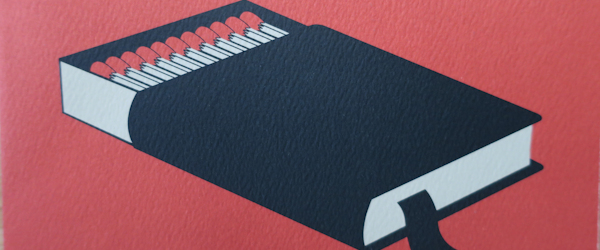
fahrenheit-451-coverThe biggest fear for an authoritarian government is to have an educated and well informed society.
In Ray Bradbury’s apocalyptic classic “Fahrenheit 451” readers represent a threat to an authoritarian regime who wants to control the population by censoring books and keeping them ignorant.

The government force in this fictitious place is composed of firemen whose job is not to put out fires, but rather to burn books and arrest those individuals hiding these weapons of knowledge.

To this Establishment, readers turning into creative thinkers endanger the stability of society. And so, without books everyone in the society are equals. Equally ignorant.

Today, there are no real authoritarian threats preventing society from reading. However, and as revealed in the prophetic novel, many unreaders have fallen prey to the hypnotizing power of media to become part of the conforming entertainment society.

Despite the incredible access people have today to acquire knowledge through reading, many people choose not to. It is way easier for them to be entertained than to think.

At an individual level, it might not seem too problematic if someone chooses easy entertainment over intellectual stimulation.

But when society must collectively participate in the decisions that will determine the future of their country, as in a presidential election, those who have not developed critical thinking and who have been mostly influenced by entertainment will vote for someone with histrionic skills rather than someone based on their intelligence and capabilities.

When a society gives more importance to the appearance than the content, when campaign slogans and mediatic scandals are more valued than ideas and principles, and when entertainers are admired more than intellectuals, society becomes complacent with mediocrity.

We cannot become frivolous and succumb to ignorance.

And because of this, yes, we need to read more. But what books should we read in a world over-saturated with superficial bestsellers and light literature?

Read books that give you valuable knowledge and stimulate thinking, read those books which demand from you an intense intellectual concentration, read those that make you reflect and question your beliefs, and those that motivate you to act for the betterment of society.

If our civilization wants to transcend life, we need to favor reason, we need to be advocates of knowledge, and we need to be more critical to demand and achieve a better world.


*Above image from the cover of “Fahrenheit 451” by Ray Bradbury, 60th Anniversary Edition – Simon & Schuster Paperbacks.

Filed Under: Arts & Culture, Books, Politics Tagged With: books, critical thinking, Entertainment Society, Fahrenheit 451, knowledge, literature, Ray Bradbury, readers, society, unreaders, what to read

Saramago y la Democracia

October 19, 2016 by Ricardo Villarreal

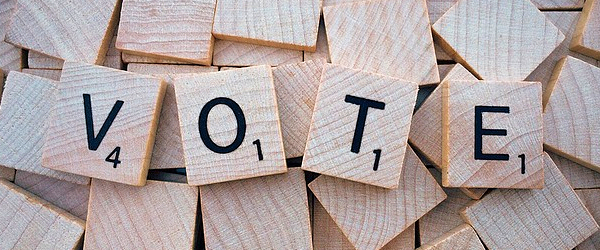
Elecciones¿Puede la democracia ser la salvación del futuro de la humanidad y de garantizar un mundo socialmente justo?

Es posible que sí, pero implica que la democracia se discuta y se reinvente, nos dice el escritor y Nobel de Literatura José Saramago en la conferencia “El Nombre y la Cosa” (2006), que quedó plasmada en el libro del mismo nombre.

Entrando en materia sobre la democracia, Saramago nos traslada brevemente a su origen en Grecia (Siglo IV, a.e.c.) citando dos principios de Aristóteles:

Por un lado, “en la democracia los pobres son soberanos, porque son el mayor número y porque la voluntad de la mayoría es ley.”

En segunda instancia, con el objetivo de garantizar la igualdad y la libertad, Aristóteles nos dice: “la igualdad pide que los pobres no tengan más poder que los ricos, que no sean ellos los únicos soberanos, sino que lo sean todos en la proporción misma de su número.”

Así que muy pronto topamos con una discrepancia y ponemos en duda la legitimidad de la democracia, pues nunca en la historia de la humanidad los ricos han sido una población mayor a los pobres, y los ricos siempre han gobernado el mundo, al día de hoy.

Pero, ¿qué hay del poder del voto que inventaron los griegos? ¿No es el voto la expresión máxima que, siendo derecho de todos, valida el funcionamiento de la democracia?

Pues no. Resulta que dentro del mismísimo proceso de votación encontramos un verdadero conflicto democrático, ya que el voto es al mismo tiempo entrega y renuncia de nuestra voluntad política.

Saramago nos ilustra cómo en el preciso instante de ejercer nuestro derecho al voto e introducirlo en la urna, nuestro sufragio ya no nos pertenece como electores. Y a partir de ahí el político, diputado, o gobernante utilizará el poder según sus intereses, que en muchas instancias no es el del ciudadano que introdujo su voto en la urna.

Por eso es muy sencillo ver que no funciona este proceso democrático. Solo basta darse cuenta del tipo de gobernantes que tenemos; políticos que han abusado de este hueco que hay en el proceso democrático que no los obliga a ser dignos representantes del pueblo.

Porque confío que ninguna población sana, de raciocinio medianamente decente, y con un mínimo de respeto, elegiría a los corruptos que tenemos en el poder.

Dice Saramago, una democracia bien ejecutada debe ser como el Sol que a todos ilumina por igual.

Pero el poder no lo tiene la gente. Es más, el único poder que existe es el económico, el que todo lo mueve, el que controla las cuerdas del teatro llamado gobierno.

Y ese poder económico no es democrático porque no lo eligió el pueblo, ni tampoco contempla la participación ni el bienestar del pueblo.

Ese sistema de organización social que equivocadamente llamamos democracia, es realmente una plutocracia, un gobierno de los ricos para los ricos.

¿Qué hacer entonces? Pues debemos reformar la democracia. Y para ello tenemos que empezar por discutirla, por admitir que no funciona para el beneficio de la gente.

El autor nos advierte que de no hacer nada y de continuar con un concepto de democracia cada vez más putrefacto, no solo terminaremos por perder enteramente la democracia, sino que se perderá también la esperanza de ver un día dignamente respetados los derechos humanos para todos.

La dimensión política del pueblo debe ir mucho más allá del sufragio. Votar cada cierto número de años no es suficiente para mantener una democracia efectiva. Debe haber mayor participación ciudadana.

Si el verdadero poder es el económico, y el principal problema es que ese poder no es de la gente, pues la respuesta está en buscar la manera de que sea la ciudadanía la que penetre y tome el control de los organismos económicos y financieros de los que autoritariamente se les ha aislado.

Para acercarnos a un sistema democrático más justo, Saramago señala que una democracia política debe ir de la mano con una real democracia económica y estar aunada a una democracia cultural.

Pero esta fórmula estructural tampoco servirá de mucho en una democracia que no se autocritica, en una democracia que no se autoevalúa, y que no haga por vigilar la manera en que los gobernantes usan el voto que los puso en el lugar que ocupan.

Solamente a partir de la reflexión, del pensamiento crítico, y del deseo genuino de dialogar y tomar acciones constructivas podemos contribuir a reformar la democracia y a transformar nuestro mundo en uno más justo.


Filed Under: Arts & Culture, Books, Libros, Literatura, Philosophy, Politics Tagged With: democracia, derechos humanos, ejercicio democrático, elecciones, filosofía, historia, José Saramago, libros, literatura, plutocracia, política, Saramago, votación, votaciones, votar, voto

  • « Previous Page
  • 1
  • 2
  • 3
  • Next Page »